Try “geodes”, “Oregon”, “gold panning” or a town name.

Where to find geodes

Geodes turn up at four verified places in four states: Utah, California, New Mexico and Missouri. Two are on public land where collecting is allowed. We last checked them on November 19, 2026.

Loading the map.

Public land Fee dig Permission needed Public land spot, not field-checked BLMNational forestState landNational park (no collecting)

Where geodes occur in the U.S.

Round rocks with a hollow or crystal-filled center, usually lined with quartz or calcite. They form when groundwater deposits minerals on the walls of a cavity in limestone, shale or volcanic rock.

Two main settings. In the Midwest they weather out of Mississippian limestone and shale, most famously the lower Warsaw Formation around Keokuk, Iowa, where Iowa, Illinois and Missouri meet. In the West they come from gas pockets in rhyolite and other volcanic rock, as at the Dugway geode beds in Utah and the geode beds of eastern Imperial County, California. Kansas geodes turn up in many counties.

Host rock: Mississippian limestone and shaly beds (lower Warsaw Formation) in the Midwest; rhyolite and related volcanic rock, or lake and stream sediments reworked from them, in the West.
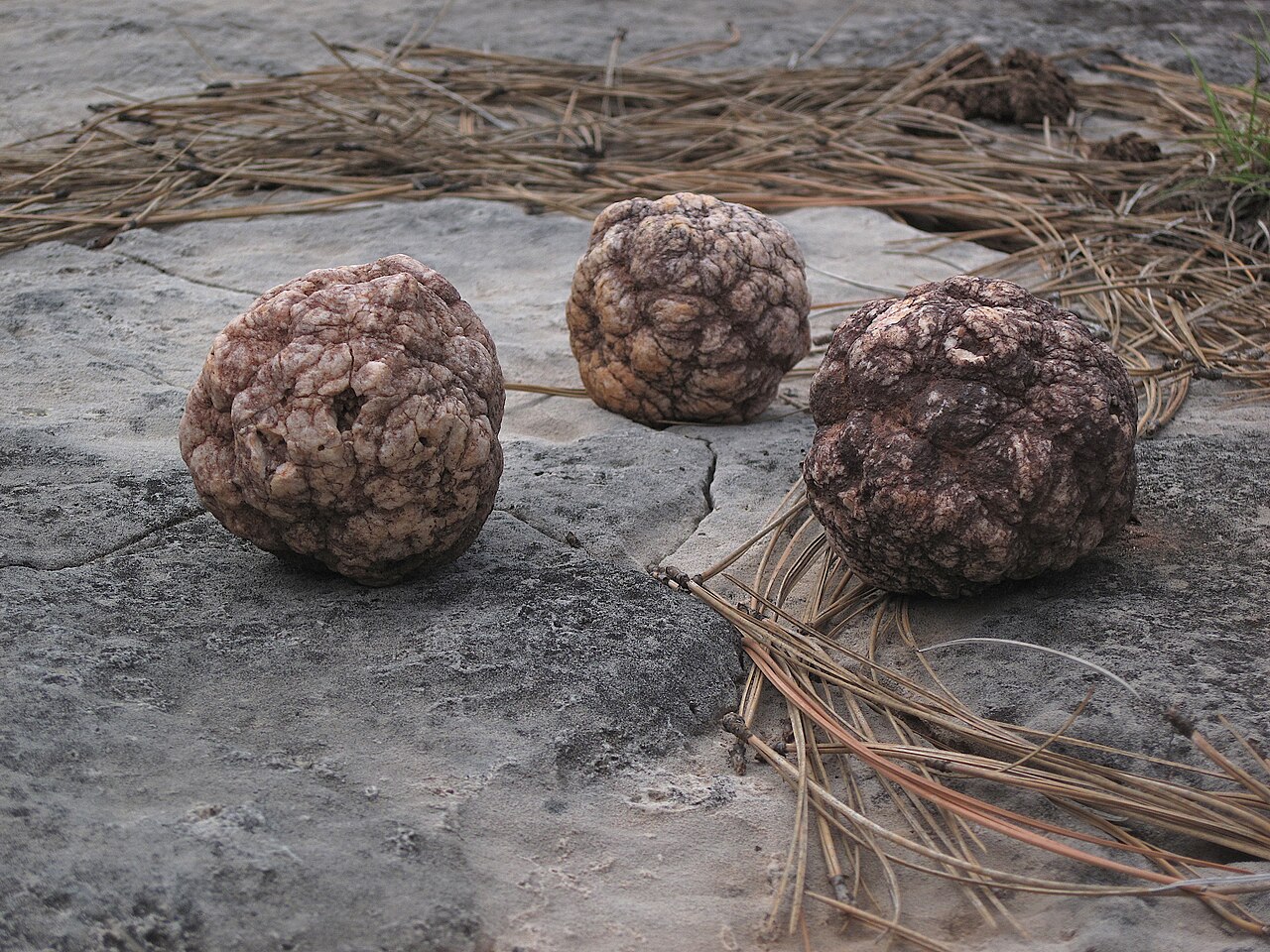
Three round, knobby, rough geodes resting on gray rock among pine needles.
Quartz geodes found below the Mogollon Rim, Arizona. Photo: cogdogblog, CC BY 2.0, via commons.wikimedia.org

Best verified places by state

On public land, not field-checked

USGS and Smithsonian records place geodes at 1 more spots on BLM or national forest land with no active mining claim at the point. We have not visited them; each one lists its land unit, nearby claims and the source record.

How to recognize geodes in the field

  • Roughly round, often with a lumpy, cauliflower-like rind.
  • Feels light for its size compared with a solid rock of the same size; hollow ones are lightest.
  • Usually 2 to 6 inches across.
  • Cracked open, the inside shows quartz crystals, sugary quartz, chalcedony bands or calcite; some are solid all the way through.

Look-alikes

  • Concretions: also round, but solid and heavy, with no crystal lining when broken.
  • Thundereggs: form in welded tuff or perlite in the West and usually have a solid agate or jasper core rather than an open crystal pocket.
  • Cobbles and chert nodules: no rind texture and no weight difference.

Where to look

  • In the Keokuk area, look in stream channels below exposures of the lower Warsaw Formation, where erosion concentrates loose geodes.
  • At western beds, dig at the edges of earlier pits to find the layer that holds geodes, and test every round stone for weight.
  • Carry a rock hammer; a sharp blow usually opens a geode. Whole ones can be saved and cut with a saw instead.
  • Soft sediment pits can cave, so do not dig under overhangs.

Collecting rules for geodes

  • Most Iowa geode localities are on private land: get permission before entering or taking rocks. Collecting is not allowed in Iowa state parks.
  • On BLM land you can usually collect reasonable amounts for personal use without a permit, but not on active mining claims or in developed recreation sites.

Details: BLM rockhounding rules, national forest rules, mining claims.

All verified places for geodes

Filter 4 places
Access
  1. Public land Free

    Dugway Geode Beds

    Utah Bureau of Land Management

    Geodes, Quartz crystals, Amethyst

    Checked November 19, 2026

  2. Public land

    Wiley Well District Geode Beds

    Blythe, California Bureau of Land Management

    Geodes, Agate, Chalcedony, Jasper

    Checked November 19, 2026

  3. Fee dig State park day use permit required. New Mexico residents are exempt from day use permits October 1 through April 30.

    Rockhound State Park

    Deming, New Mexico State park

    Thundereggs, Geodes, Jasper, Agate, Obsidian, Quartz crystals

    Checked November 19, 2026

  4. Fee dig $25 per person ages 12 and up, which covers 50 pounds of geodes; extra weight is $0.75 per pound. No group rates.

    Sheffler Rock Shop and Geode Mine

    Alexandria, Missouri Private

    Geodes

    Checked November 19, 2026

Sources

  1. Most Iowa geodes are round, often with a lumpy or cauliflower-like outside, and typically 2 to 6 inches across. iowageologicalsurvey.uiowa.edu, checked November 19, 2026.
  2. Keokuk geodes come mostly from the lower Warsaw Formation, of Mississippian age, in southeastern Iowa. iowageologicalsurvey.uiowa.edu, checked November 19, 2026.
  3. Where streams erode the geode-bearing beds, geodes collect in stream channels. iowageologicalsurvey.uiowa.edu, checked November 19, 2026.
  4. Most Iowa geode sites are private, and geode collecting is not allowed in Iowa state parks. iowageologicalsurvey.uiowa.edu, checked November 19, 2026.
  5. Dugway geodes formed when groundwater deposited minerals in gas cavities in rhyolite. geology.utah.gov, checked November 19, 2026.
  6. Geodes can be recognized in the field by their round shape and light weight. geology.utah.gov, checked November 19, 2026.
  7. Geodes in eastern Imperial County, California, are hollow chalcedony structures lined with quartz crystals. blm.gov, checked November 19, 2026.
  8. On BLM land the public may generally collect reasonable amounts of rocks and mineral specimens for noncommercial use without a permit, except in places such as developed recreation sites and active mining claims. blm.gov, checked November 19, 2026.