Try “geodes”, “Oregon”, “gold panning” or a town name.

Where to find sapphires

Sapphires turn up at seven verified places in three states, most of them in North Carolina and Georgia. We last checked them on November 20, 2026.

Loading the map.

Public land Fee dig Permission needed Public land spot, not field-checked BLMNational forestState landNational park (no collecting)

Where sapphires occur in the U.S.

Sapphire is gem corundum in any color but red. Montana is the leading U.S. source, from river gravels and the Yogo dike.

Montana: Missouri River gravels near Helena, Rock Creek in Granite County, Dry Cottonwood Creek, and Yogo Gulch in Judith Basin County. North Carolina: the Cowee Valley near Franklin.

Host rock: Most Montana sapphire comes from stream and terrace gravel. Yogo sapphires come from an igneous dike. North Carolina stones come from creek gravel.
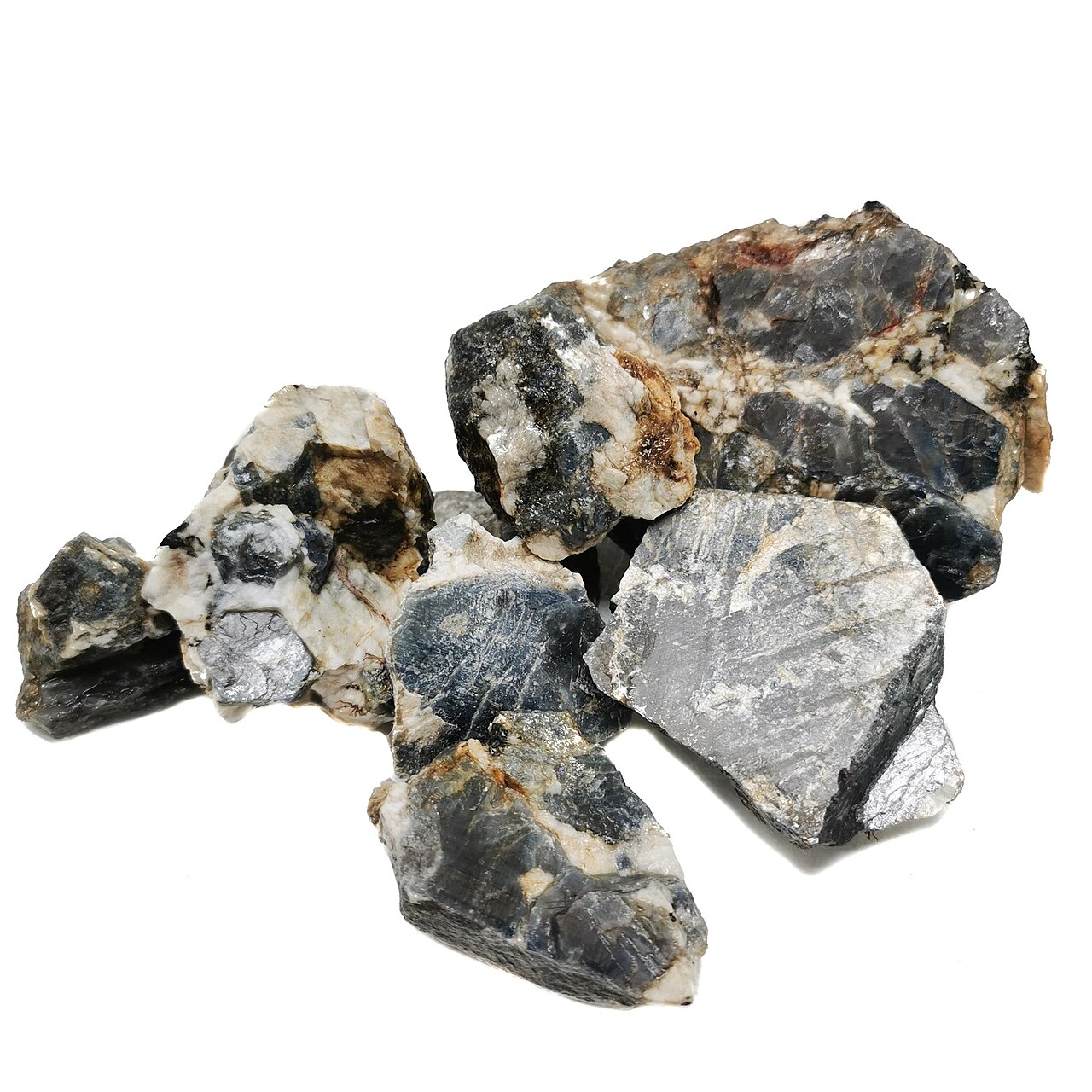
Rough grayish blue sapphire crystals in white rock.
Rough blue sapphire (corundum) in matrix from British Columbia, Canada. Photo: Adam Kelliher / Rubble Rock and Gem, CC BY-SA 4.0, via commons.wikimedia.org

Best verified places by state

On public land, not field-checked

USGS and Smithsonian records place sapphires at 3 more spots on BLM or national forest land with no active mining claim at the point. We have not visited them; each one lists its land unit, nearby claims and the source record.

How to recognize sapphires in the field

  • Hardness 9: it scratches quartz, topaz and garnet.
  • Heavy for its size: specific gravity about 4.0.
  • Six-sided barrels and plates. Missouri River stones are often rounded or pitted; Rock Creek stones tend to be flat hexagonal plates.
  • Montana gravel sapphires are mostly pale blue or blue-green, with pink, yellow, orange, green and purple also found.

Look-alikes

  • Blue spinel and glass: spinel is softer (8) and forms octahedrons; glass shows bubbles and is softer still.
  • Kyanite: blue, but forms long blades that a knife can scratch along their length.

Where to look

  • Screen and wash gravel, then look for the heavy stones that settle in the middle of a jigged screen.
  • Missouri River and Rock Creek sapphire hunting is mostly at fee-dig operations that sell gravel to wash.
  • Rough Montana stones look paler than cut ones in shops; much commercial material is heat-treated.

Collecting rules for sapphires

The general rules for the land apply. On BLM land you can take reasonable amounts for personal use; national parks allow no collecting; private land and mining claims need the owner’s permission.

Details: BLM rockhounding rules, national forest rules, mining claims.

All verified places for sapphires

Filter 7 places
  1. Fee dig $30 per person; age 6 and under free with a paying miner; discounts for gem club members and veterans

    Cherokee Ruby & Sapphire Mine

    Franklin, North Carolina Private

    Ruby, Sapphire, Garnet, Feldspar and moonstone, Kyanite, Quartz crystals

    Checked November 19, 2026

  2. Fee dig Gold panning without the tour from $60; gem mining buckets from $30; underground tour $24.95 adults, $15.95 ages 3 to 12, with one free sample pan

    Consolidated Gold Mine

    Dahlonega, Georgia Private

    Gold, Emerald, Ruby, Sapphire, Topaz, Amethyst, and 3 more

    Checked November 19, 2026

  3. Fee dig General admission $19.95 adults (13 and up), $15.95 youth 12 and under, free 3 and under; includes one pan of gold dirt and one two-gallon gem bucket

    Crisson Gold Mine

    Dahlonega, Georgia Private

    Gold, Ruby, Sapphire, Emerald, Garnet, Amethyst

    Checked November 19, 2026

  4. Fee dig Day permit $30 adults (15 and up), $10 children 4 to 14; enriched buckets cost extra

    Emerald Hollow Mine

    Hiddenite, North Carolina Private

    Emerald, Aquamarine and beryl, Sapphire, Garnet, Topaz, Amethyst, and 2 more

    Checked November 19, 2026

  5. Fee dig Two-gallon buckets from $45 plus tax; larger mixed buckets $100 to $200 and a 30-gallon barrel $1,000

    Gem Mountain Gemstone Mine

    Spruce Pine, North Carolina Private

    Emerald, Aquamarine and beryl, Garnet, Amethyst, Ruby, Sapphire, and 2 more

    Checked November 20, 2026

  6. Fee dig Native dig pile, unlimited buckets: $40 adults, $20 ages 6 to 12, under 6 free with a paying adult (two per adult)

    Mason Mountain Rhodolite & Ruby Mine

    Franklin, North Carolina Private

    Garnet, Ruby, Sapphire, Kyanite, Feldspar and moonstone, Quartz crystals

    Checked November 19, 2026

  7. Fee dig Dig option $85, including one 30 lb concentrate plus a 5-gallon bucket you dig in the pit; sample bags $10; bags of gravel $75 to $150. The FAQ also mentions a $60 dig option, so call to confirm current prices.

    Spokane Bar Sapphire Mine

    Helena, Montana Private

    Sapphire, Garnet, Ruby, Topaz, Agate, Jasper, and 2 more

    Checked November 19, 2026

Sources

  1. Blue sapphire is corundum with a Mohs hardness of 9. pubs.usgs.gov, checked November 19, 2026.
  2. The first U.S. sapphires were found in Missouri River gravels in Lewis and Clark County, Montana, in 1865. apps.usgs.gov, checked November 19, 2026.
  3. Yogo sapphire is mined from the Yogo dike and its extension. apps.usgs.gov, checked November 19, 2026.
  4. Missouri River sapphires are mostly pale blue or blue-green, also pink, green, purple, yellow and orange. apps.usgs.gov, checked November 19, 2026.
  5. Rock Creek sapphires are mostly crude hexagonal plates. apps.usgs.gov, checked November 19, 2026.
  6. Several Missouri River operations produce sapphires or run dig-for-fee areas. apps.usgs.gov, checked November 19, 2026.
  7. Ruby and sapphire are found in the Cowee Valley near Franklin, North Carolina, and many show asterism. deq.nc.gov, checked November 19, 2026.